Table Of Content
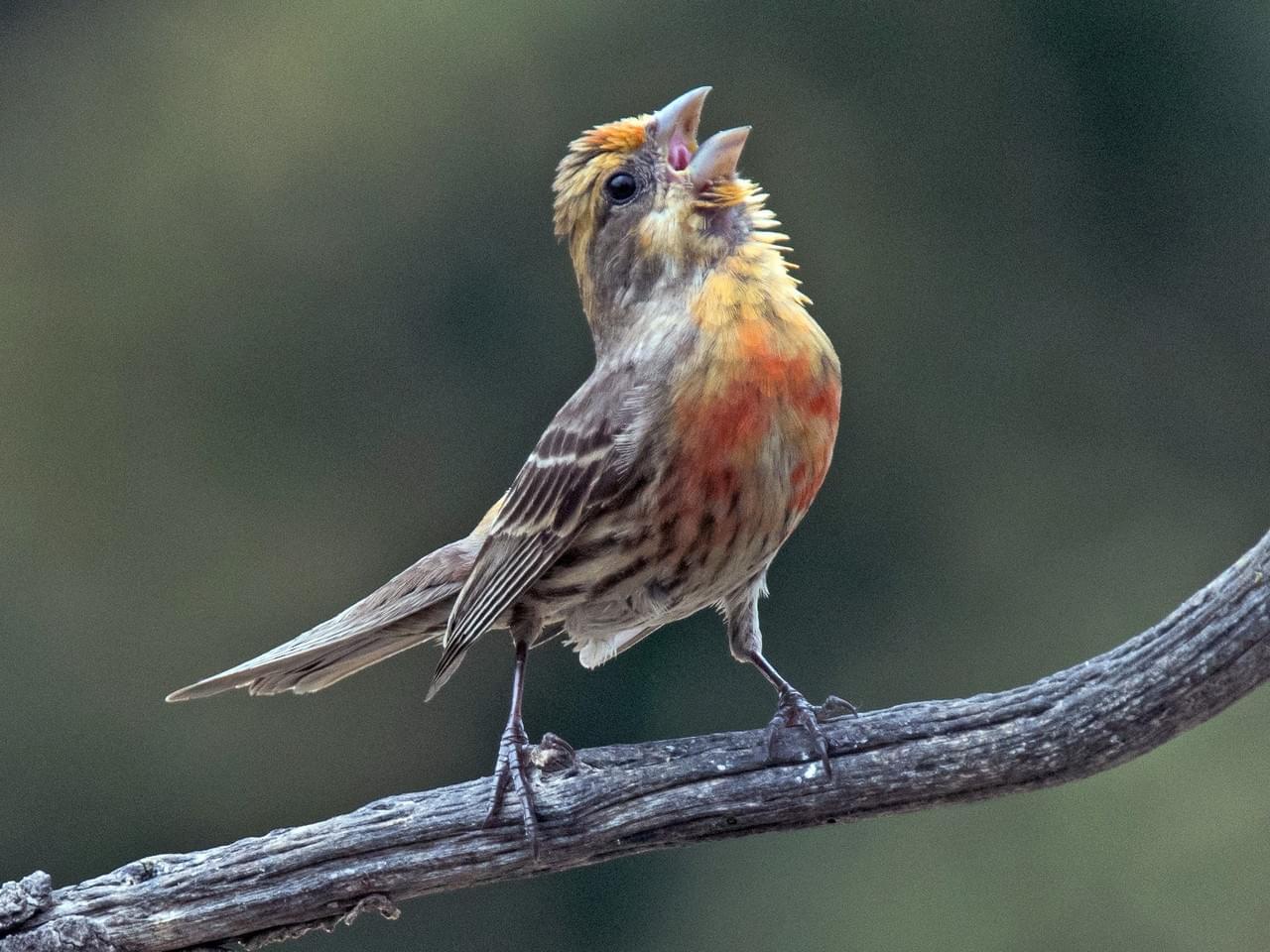
Once the brooding period has ended, the female’s role slowly declines. Before the current clutch leaves the nest, she begins preparing for the next brood. Unlike many other birds who switch their eating habits in spring and summer, Finches are vegetarians all year. The young will leave the nest in about 11 to 17 days after hatching. The female lays 2 to 6 bluish eggs that are finely speckling. Incubation is done by the female and the eggs will hatch in 12 to 14 days.

Where Do House Finches Nest?
They love thistle and sunflower seeds if you want to attract a House Finch to your backyard birdfeeder. They also love eating weed seeds and berries in the warm summer months. It has a rosy red color with a higher contrast of red around its head and breast. They also have streaks of brownish feathers on their backs and tail feathers.
Nest Placement
A red and brown bird at your feeder might be either one throughout much of the United States. House Finches are common and widespread across most of North America, including Hawaii. Meanwhile, Purple Finches nest in Canada, along the Pacific, and in the Northeast. In winter they migrate as far south as Florida, but they don't typically visit the Interior West at any time of year. To see each bird's range, visit our online field guide, or download our free Audubon bird guide app.
Where do house finches nest?
Find out more about what this bird likes to eat and what feeder is best by using the Project FeederWatch Common Feeder Birds bird list. You can find House Finches by looking around settled habitats, such as city parks, urban centers, residential backyards, farms, and forest edges. Gregarious and social, House Finches are found in noisy groups that are hard to miss if present.
They may also sleep inside vents, hanging planters, or under roof overhangs. They require a 2-inch diameter entryway and a 6x6 inch floor. Nest boxes should be attached to a pole or the side of a shed - somewhere that offers cover and cannot be easily reached by predators. Experience plays a role in how quickly and well nests are built. First-time females tend to struggle with structure and placement, whereas experienced females work much faster and more efficiently. The construction process can take up to three weeks, with the female most actively working in the mornings and slowing down in the afternoons.
If sick birds are seen around feeders, remove feeders and clean with diluted bleach solution to reduce spread. Cassin's Finches have a bright red peaked crown, whereas House Finches have an evenly round head that is all red. They also have less streaking on the flanks than House Finches. House finches generally do not stay in a nest at night, except during the incubation and brooding period. Instead, they find an inconspicuous site in the foliage of a coniferous tree, on a cactus, or under a rock ledge.
Mating Habits - Do House Finches Mate For Life
On the other hand, Male Purple Finches have a more subtle and understated red tone with a white underbelly and no streaks of brown. The House Finch is easy to identify simply by its coloring and size, but there are stark differences between male and female House Finches. A pet shop owner in New York captured and sold House Finches as pets, which was very illegal. Fearing arrest and prosecution, these birds were set loose into the wild. Even experts get flummoxed by finches, but don’t despair. With a little practice, you can learn the clearest field marks for each of these species.
Here are birds birdwatchers may see in DE. Search our database - The News Journal
Here are birds birdwatchers may see in DE. Search our database.
Posted: Sat, 11 Nov 2023 08:00:00 GMT [source]
Yellow and orange plumages are more common in arid areas. Males remain nearby, occasionally picking up nest material, but these are never used in the nest. Females collect various plant matter, twine, string, and hair, carry it back to the nest site, and begin building. Pairs of finches are monogamous during the breeding season, and typically only reproduce with one partner. A single pair can raise several clutches of chicks during the breeding season. Each clutch contains about four eggs, and the incubation period lasts around two weeks.
What time of year do house finches nest?
The House Finches in mild weather locations in the south or western United States typically stick around for the winter months. The coloring of a female House Finch is all brown without any notes of red color seen in male House Finches. Susceptible to House Finch eye disease, an illness that gives them swollen eyes and leaves them lethargic.
Their primary habitats are backyards, suburban areas, cities, farms, and parks. In their natural range, the species inhabits more “traditional” and less urban habitats. Attract them to your backyard bird feeders with nyjer, sunflower seed, mixed birdseed, peanuts, fruit, suet and sugar water. House Finches are familiar birds of human-created habitats including buildings, lawns, small conifers, and urban centers. In rural areas, you can also find House Finches around barns and stables.
Mike Jacobs Always in Season: A vagrant finch makes headlines and tempts birders - Grand Forks Herald
Mike Jacobs Always in Season: A vagrant finch makes headlines and tempts birders.
Posted: Sat, 27 Jan 2024 08:00:00 GMT [source]
The attractive house finch is one of the more common and recognizable species throughout the United States. It has become very common in suburban areas and is easily attracted in large numbers to seed feeders. However, some populations have undergone a steep decline since January 1994, owing to a disease called mycoplasmal conjunctivitis. The disease causes respiratory problems and red, swollen eyes, making them susceptible to predators and adverse weather. House Finch conjunctivitis was first observed at feeders in the Washington, D.C. Area, but has spread rapidly through the eastern House Finch population and into the West.
In the winter, they join flocks with pine siskins and goldfinches. It’s a rush when you can confidently recognize an elusive or hard-to-identify bird. That burst of adrenaline and pride is just one of the many rewards of being a birder. But spotting the differences between a house finch vs a purple finch is particularly tricky. Here are some important things to look out for when you see a small red finch in your backyard.


No comments:
Post a Comment